From One Doula to a Community of Compassion
What began in 2021 with a single doula and a shared vision has grown into something truly meaningful.
Hospice of the Piedmont’s Death Doula program was created to enhance nonmedical, end-of-life support for patients and families. Today, the program includes more than 40 trained doulas providing compassionate care across our community.
Thanks to generous philanthropic support, this program is offered free of charge to all Hospice of the Piedmont (HOP) patients.
Yet even in its fifth year, one question continues to come up:
What exactly does a death doula do?
What Does a Death Doula Do?
“The birth doula and death doula model are quite similar,” explains Beth Eck, HOP’s Director of End-of-Life Doula Services.
“Both birth and death are big life events. There’s a lot to prepare for—emotionally, practically, logistically, physically, and spiritually. And once a baby is born or a person has died, life will never be the same for those who love them.”
Death doulas provide a steady, compassionate presence during one of life’s most profound transitions.
Practical and Emotional Support
Doulas support patients and families in many ways, including:
- Organizing photographs and legacy projects
- Writing obituaries
- Planning memorial services
- Creating space for meaningful conversations
They also offer something less tangible, but just as important: a calm, nonjudgmental presence where individuals can share their hopes, fears, and reflections about the end of life.
The Power of Presence: Lyall and Ella’s Story
For many doulas, this work is deeply personal.
Lyall Harris trained as a Death Doula with HOP in 2023, answering what she describes as a clear calling.
“At midlife, I felt a deep and clear calling to be with people at the end-of-life threshold,” she shares.
Lyall works with both hospice and palliative care patients. In palliative care especially, the extended time together allows for deeper connection.
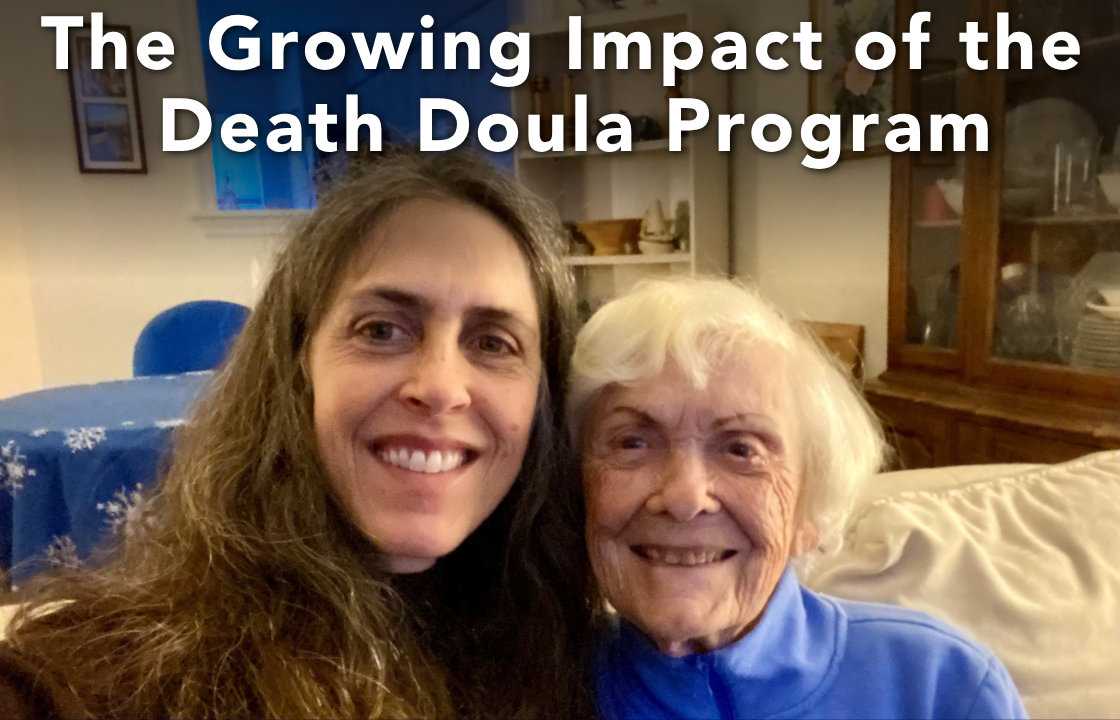
“I’ve been with my current palliative care patient, Ella, for 16 months,” Lyall says. “We’ve had time to build a lot of trust. The life review has been incredibly rich, nuanced, layered, and full of her insights. It’s been an immense privilege to hold and dwell in the tapestry of Ella’s life.”
A Patient’s Perspective
For Ella, now in her late 90s, the relationship has been profoundly meaningful.
“Lyall accepts me for who I am. She allows me to explain how I feel about my life, my future, my soul’s journey, and so much more,” Ella shares. “It’s been wonderful to have someone so thoughtful and understanding. I look forward to her visits.”
Creating Space for Conversations About Death
Beyond patient care, HOP’s doulas are helping to shift how our community approaches conversations about death and dying.
A core goal of the program is to create space—and permission—for people to explore their mortality before a crisis point.
Meeting People Where They Are
Whether it’s:
- Sharing a donut at a Death Over Donuts event
- Attending an Obituary Writing workshop
- Completing the Five Wishes handbook
HOP doulas are there to guide open, honest conversations about both death and life.
As Beth often shares, quoting her teacher Alua Arthur:
“Talking about dying doesn’t make you dead.”
A Program Rooted in Compassion
The Death Doula program at Hospice of the Piedmont continues to grow, not just in size, but in impact.
By offering presence, guidance, and compassion, doulas help patients and families navigate one of life’s most meaningful transitions with dignity and connection. To learn more, visit here.
This story was originally published in our Spring 2026 Heart of Hospice Issue. Read the full newsletter here.